
Monday briefing: What you need to know about a weekend of ‘chaos’ in France
🇬🇧 Reino Unido · General · hace 2 h · Fuente: The Guardian World
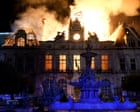
Good morning. I bet your weekend was better than Emmanuel Macron’s. On Friday, the evening before mass protests that were planned across France, he attended a Céline Dion concert in Paris with his wife, Brigitte, prompting comparisons to Louis XIV and Marie Antoinette. On Sunday evening, he was forced to give a televised speech condemning the “unbridled violence” and riots that erupted in French cities over the weekend.
The rioters that burned makeshift barricades of bicycles in Paris, destroyed the steeple of Limoges’ town hall and set fire to Lyon’s tourism office were described as “LE CHAOS” on the front page of La Tribune Dimanche, and “SCENES D’INSURRECTION” on Le Parisien Dimanche. By Sunday, protests had also taken place in Spain, Portugal and Italy.
The Vatican | Pope Leo told a crowd gathered in St Peter’s Square on Sunday that he would “gradually resume” his activities, at his first appearance before the faithful since undergoing an operation to remove a cancerous tumour from his lung.
UK news | A “well-known individual” is trying to secure a permanent injunction against the Guardian and ITN to prevent them from publishing details of serious allegations made against him.
US politics | Donald Trump fired his immediately embattled new press secretary, Katie Zacharia, on Friday evening after just five days in the job. The conservative commentator becomes the shortest serving occupant of the role in US history.
Reform | A Reform UK mayor is under police investigation for allegedly showing “naked and sexualised” images of himself to a female member of staff. Luke Campbell, a former Olympic boxing champion, is understood to have been questioned under caution by Humberside police.
Energy | The development of a huge AI datacentre hailed by the UK government has received a fresh setback after Microsoft pulled out of the project over concerns about power supplies.
In the early hours of Sunday, cleaners started to remove the detritus from Parisian streets: shards of glass from broken shop windows, smashed bus shelters, burned out cars. The smell of teargas still lingered in the Métro station at Place de la République. “Areas of Paris looked like a wasteland,” Paolo Stuppia , a sociologist at Sciences Po in Paris, tells me. About 855 people have been arrested in Paris, and a total of 2,400 have been arrested across France. Lamia El Aaraje, the Socialist deputy mayor of Paris, said the capital had experienced a level of violence “we had never seen before.”
There have been so many incredible images of destruction (see our gallery here ) that it’s possible to forget Saturday was, for the most part, defined by peaceful protests. Hundreds of thousands of people, many of them schoolchildren and parents, joined marches across the country. A far smaller group of protesters, many wearing face masks, smashed street furniture and torched cars and bus stops. A third group took the opportunity to loot shops. “I saw teenagers running off with shoeboxes, clothes, and perfume,” Angelique Chrisafis , the Guardian’s Paris correspondent, tells me.
It’s the second group that has dominated the headlines. On Saturday afternoon, people set the town hall in Limoges alight (its spire collapsed dramatically on Saturday evening), and broke into the city hall in Marseille. “It wasn’t as if the peaceful protesters suddenly turned violent,” Chrisafis says. “It was as if the government didn’t have a hold on the situation, and suddenly, the police were really caught off guard.”
The peaceful protesters ‘Our future is being stolen from us’
When a small number of people break the law during otherwise peaceful protests, there’s a tendency to condemn such acts as “criminality, pure and simple” (to quote David Cameron during the 2011 London riots), and to disqualify the idea they represent a form of antagonism against authority. “If everything was going well in France, you wouldn’t have young kids ransacking stores,” Stuppia says.
Such criminal acts can also become a means of undermining peaceful protesters. “Some of those people are now pretty upset because they believe the government will be talking about burning barricades rather than the fact they turned out in such large numbers,” Chrisafis says. French students have been protesting against the school system since September and calling for repairs to decrepit buildings, smaller class sizes, and reforms to a widely loathed university admissions system. Education is a particularly fraught subject in France, where academic credentials overwhelmingly determine job prospects. But their concerns are also broader; as Greta Thunberg put it recently, “our future is being stolen from us,” a feeling that many young people across the continent share.
The student protests have since become the focus in a constellation of different issues, ranging from the cost of living to rising fuel prices and public service cuts. Those on Saturday drew in numerous groups, including unions and supporters of the Gilets Jaunes. “Gen-Z is really facing a polycrisis of different issues, from the climate crisis to the rise of the far right and the use of AI” Stuppia tells me. “And you can see the same set of issues coming alive in Italy, in Belgium, in Portugal, and with the Cockroach protests in India. Young people want change.” (You can read more about how these protests have spread to other European countries in this story by Sam Jones ).
The police response has been at once strikingly brutal and remarkably inept. As Guardian columnist Rokhaya Diallo pointed out in this recent opinion piece , French schoolchildren have been “treated like enemies to be crushed” over the last few weeks. French lawyers have said that several teenagers have suffered “war-like” injuries from police, including a 14-year-old boy who suffered a fractured jaw and a 15-year-old whose hand was blown off in an explosion involving a police stun grenade. The number of arrests has also been disproportionate: according to this graph by Pierre Bataille, a sociologist at Grenoble Alpes university, more people were arrested during two weeks of the student protests than members of the Gilets Jaunes were in an entire year.
The shortcomings of this zealous focus on student protesters became clear on Saturday afternoon. Crowd psychologists have demonstrated that rather than instilling order, heavy-handed policing can actually trigger violence. While the police blocked a demonstration route between Place de la République and Place de la Concorde on Saturday citing “serious risks of public disorder,” large sections of Paris were left without enough officers to prevent looting. According to the French Green leader Marine Tondelier, “entire cities were left to the mercy of rioters, while peaceful protesters were subjected to violence.” She has since been calling for the resignation of Laurent Nuñez, chief of staff of the Paris police, calling his performance over the weekend “an absolute disaster”.
In his statement last night , Macron drew a distinction between protesters with “legitimate demands” and “those who destroyed, smashed, and looted”, and criticised “factious groups from the ultra-left, joined by numerous delinquents” (pending an investigation, though, it’s impossible to say what the rioters’ motivations were). There are tricky and enduring questions that his government now faces. It failed to anticipate both the student protests that have engulfed France since September, and the violence that broke out over the weekend. As this interesting New Yorker piece (£) points out Macron’s experience of the public education system is limited, and even his education minister has admitted that at least some of his five children attend private schools.
The protests and the police response have underscored how out of touch Macron’s government appears to be with French people, many of whom are angry about the price of fuel and the cost of living. This sense of disaster – described by the mayor of Limoges, Guillaume Guérin, a member of the conservative Les Républicains party, as a “colossal failure of the state” – has overshadowed the thousands of people who turned out for peaceful protests, and plays into the hands of the far right (Marine Le Pen, who gave her own address on X before Macron’s, has described the riots as a “threat to democracy”). In a recent interview with Le Monde, the mayor of Lyon, Grégory Doucet, struck a more dispassionate tone, and said there need to be “concrete, political answers” to “the social unrest shaking our country.”
Monday | The two-week biodiversity summit, Cop17, begins in Yerevan, Armenia, as countries come together to seek to protect nature.
Tuesday | The Covid-19 inquiry publishes its report on the adult social care sector.
Sunday | Incumbent Lula da Silva takes on Flavio Bolsonaro in the run-off of the Brazil general election.
This was an eye-opening piece; one of our reporters went undercover at a wellness conference in the UK to expose the dangerous health advice of Barbara O’Neill , who is seen as a risk to public safety in Australia. Katy
Football | Arsenal left it late to snatch a 1-0 victory against Nottingham Forest at the City Ground, while Brighton had a resounding victory at home against Crystal Palace, winning 5-0 to put them 2nd in the Premier League. Elsewhere Man Utd could only manage a 1-1 draw away against Leeds.
Cricket | The second test between South Africa and Australia was abandoned due to poor weather with only 12.2 overs being bowled.
Football | In the WSL Chelsea beat Spurs 6-2 , putting pressure on league leaders Man City by moving up to 2nd place in the table.
“Macron condemns ‘unbridled violence’ of huge French riots”, is the Guardian ’s front page today.
The Times says “PM: Neets crisis is moral failure”, the Telegraph writes “Healey plans raid on family businesses”, the Express has “‘Axe the family farm tax now, prime minister,’” and the Mail leads with “True cost of Labour migration dithering”.
The FT has “Investor anxiety and public backlash threaten to scupper $10tn AI boom”, Metro splashes “British kids in CRISIS” and the Sun says “Credit crunch”.
A spy charge, a Russian jail and a swap for an assassin: the story of Evan Gershkovich
US journalist Evan Gershkovich talks to Annie Kelly about his arrest by the Russian intelligence services in 2023, his 16-month detention, and the swap deal that eventually took him home .
Fuente: The Guardian World
1 fuentes están cubriendo esta historia
También está pasando
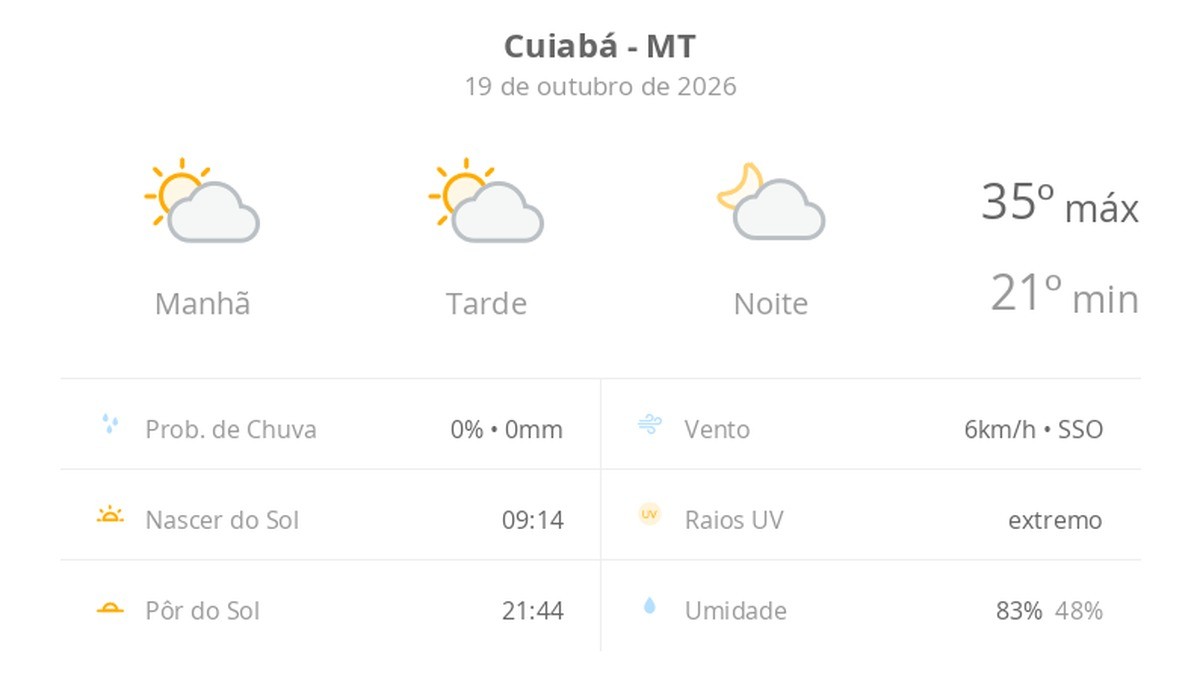
Previsão do tempo hoje para Cuiabá (MT): sol com algumas nuvens; não chove
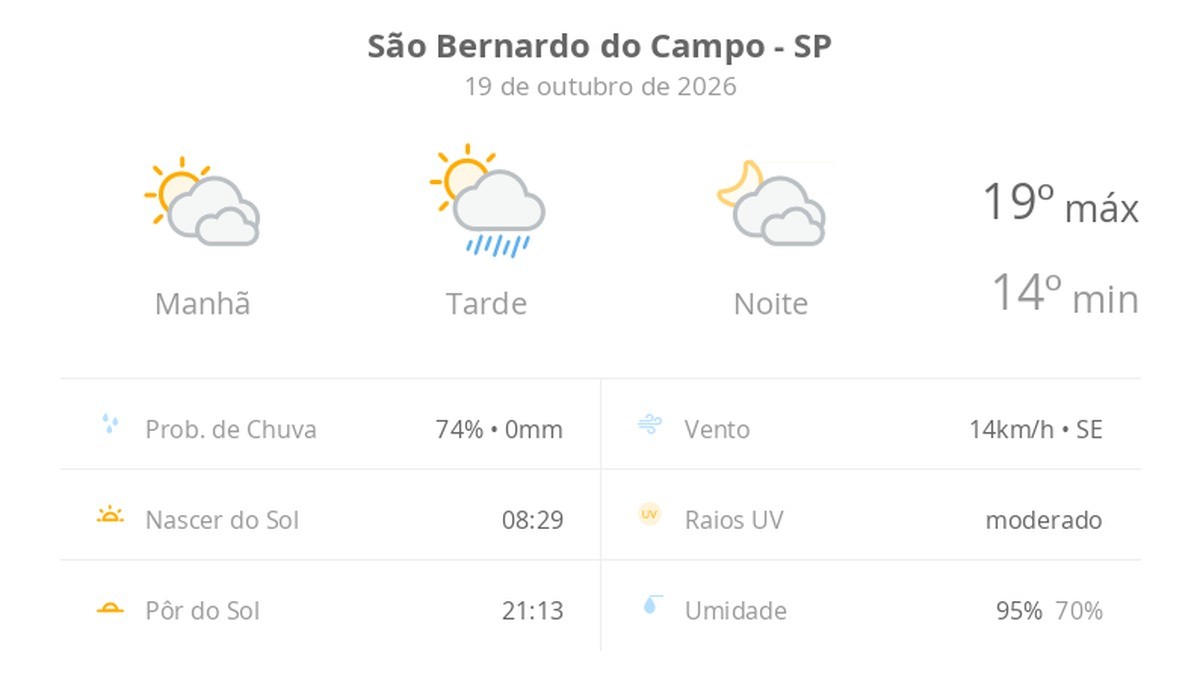
Previsão do tempo hoje para São Bernardo do Campo (SP): sol com muitas nuvens e pancadas de chuva à tarde; muitas nuvens à noite, sem chuva
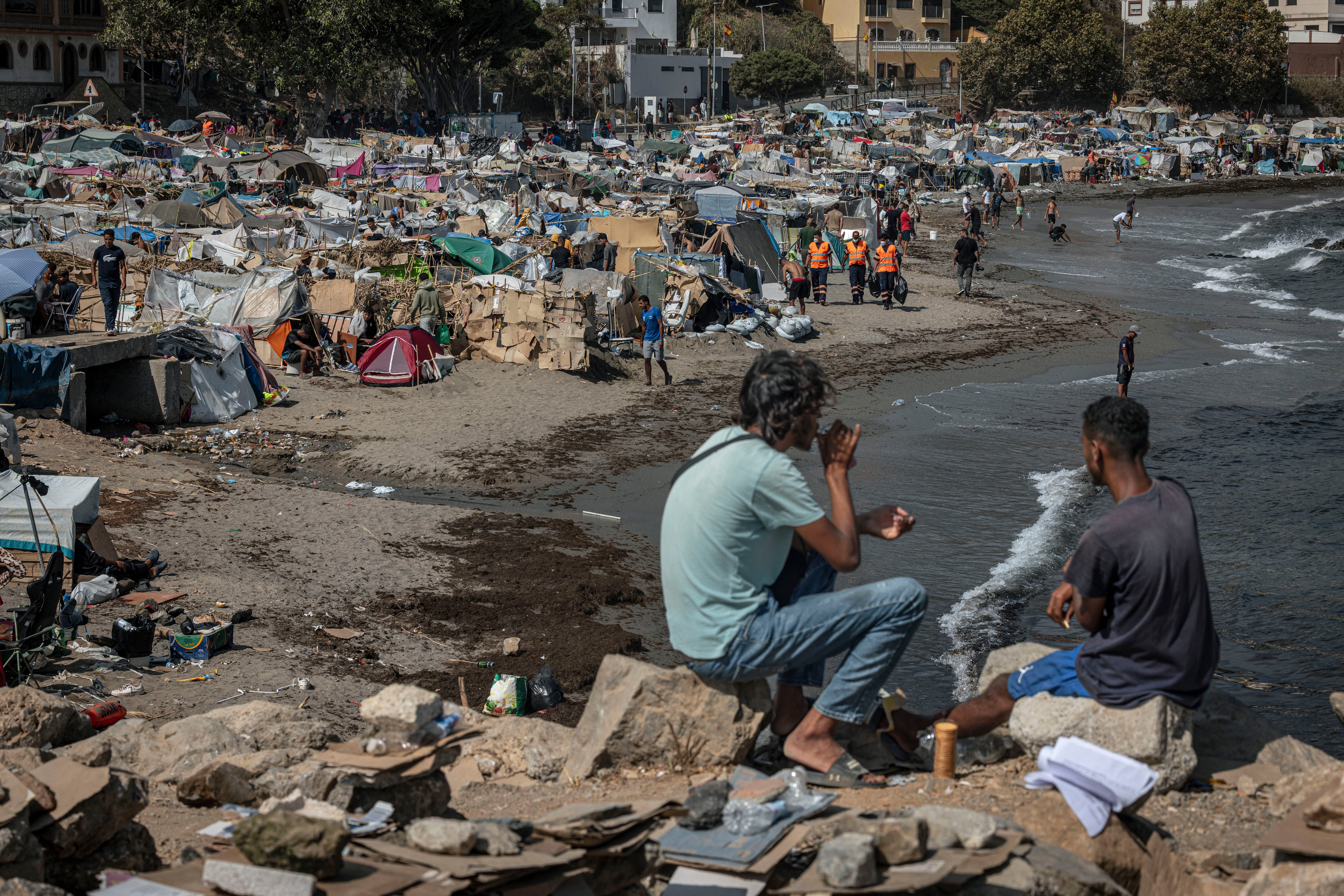
Muere un migrante marroquí tras desplomarse en un asentamiento de la playa del Trampolín en Ceuta
El fiscal del ‘caso Begoña Gómez’, contra el juez Peinado: “No es aceptable pasar por encima de los profesionales”
Resumen propio de La Primera en Línea con enlace al medio original. Los derechos del artículo completo y de las imágenes pertenecen a su fuente. Enlace de esta noticia