
AI has come for Arizona’s water
🇺🇸 Estados Unidos · Tecnología · hace 2 h · Fuente: The Verge

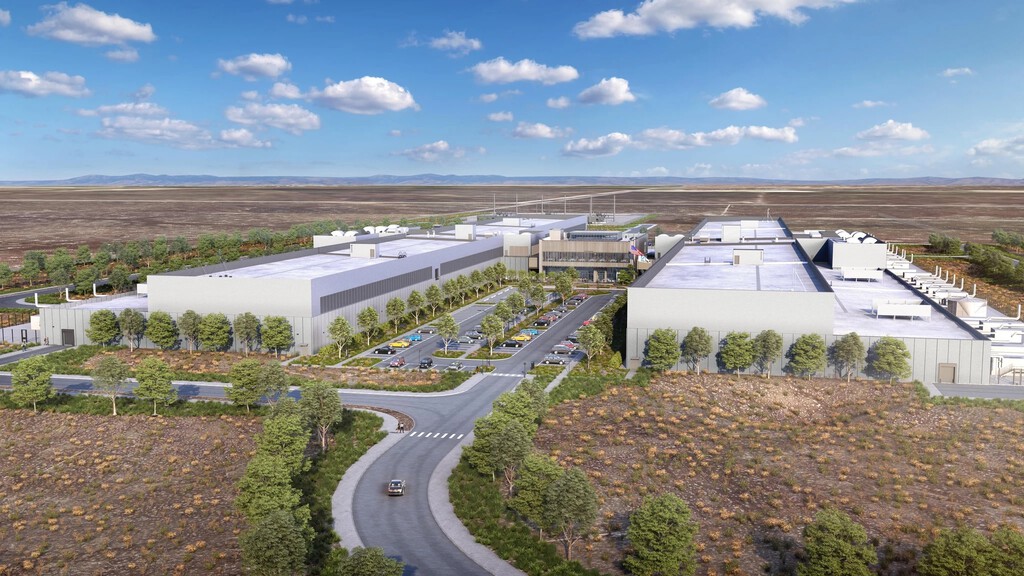
A A hulking gray giant rises from the desert. Inside, engineers create the force behind our phones and computers and appliances, our streaming services and search engines and chatbots and vibe-coded apps and websites. The complex is simultaneously massive and squat, dwarfed by the mountains that surround it, and it is endless. I drive past one building, and then another, and then the ground opens up where construction crews have dug up the earth so a third building can rise. There is a parking lot, and then another, and then another. There is an empty lot on the other side of the street, full of cars and the occasional food truck to feed the thousands of laborers who are busy transforming this expanse of desert into an industrial park. There is dust, so much of it, choking the air.
I stand before the savior of Arizona’s economy. Like all great deities, it demands sacrifice. In the desert, nothing is more precious than water, and water is what must be given — nearly 5 million gallons a day, every day, sourced from Phoenix’s municipal supply. The offering has been well worth it.
All of this is the fruit of the Taiwan Semiconductor Manufacturing Company, the world’s leading producer of microchips. Its Arizona operation is the result of a pre-pandemic gamble Phoenix made to revive its sluggish economy , which never quite rebounded from the Great Recession. Now TSMC’s foundry looms over the city’s outskirts.
TSMC is a success story, one that some local leaders may have hoped to repeat with hyperscale data center developments. The progression may have seemed natural: The Grand Canyon State is not only home to the largest chip factory this side of the Pacific but also 172 data centers , neither of which faced much pushback. But the newer, larger developments being proposed from Phoenix to Tucson demand more of everything — more water, more power, more land — than Arizonans are willing to give. Where TSMC was welcomed with open arms and the first wave of data centers was largely ignored, new developments are facing mass backlash in Arizona, where a grassroots, surprisingly bipartisan coalition of residents has united against data centers.
In reporting this story, I spoke to local activists and economic developers, elected officials and their angry constituents. I sat in on city council meetings where people lined up by the dozens to speak up against data center projects, and in cozy suburban homes where tight-knit groups of former strangers told me about the struggle that brought them together. I pored over maps of Arizona’s dry, cracked landscape with laypeople who, over the past two years, have made themselves experts on zoning and land use and water consumption so they can understand the beast they’re trying to fight. The locals on both sides of this debate claim to want the same thing: a better, more prosperous Arizona. Their visions for achieving it, however, are completely at odds.
In Arizona and elsewhere, data center developers have tried to win over locals by making enticing promises about the jobs, tax revenue, and infrastructure they’ll bring with them. All they ask for in exchange is water — and, they swear, not nearly as much of it as you’d expect. Some hyperscale data centers, like Google’s facility in The Dalles, Oregon, use about 1.5 million gallons a day, about one-third of what TSMC’s Arizona complex consumes in the same timeframe. Those reassurances, however, aren’t enough to assuage Arizonans, who now have to contend with the fact that the state will soon lose access to nearly 30 percent of the water it receives from the Colorado River.
Even now, as people across the country sour on AI and fight against data centers in their communities, TSMC’s Arizona operation hums along without significant opposition. And yet it’s impossible to make sense of why Arizonans are so opposed to new data center development without first understanding why they eagerly welcomed TSMC, even though both industries must contend with the issue that has plagued Arizona since its founding: There isn’t enough water.
For as long as anyone could remember, business in Arizona revolved around the storied “five C’s”: cattle, copper, cotton, citrus, and climate, a catchall for the region’s mild, salubrious winters, which locals say often more than make up for the sweltering summers.
Now the state has a sixth C, Arizona native Christine Mackay tells me. “Chips.”
The TSMC development is, in a sense, Mackay’s doing. As the head of Phoenix’s economic development office, she spearheaded the effort that brought the Taiwanese giant to the Sonoran Desert. In 2020, while the global economy was all but shut down, TSMC made an announcement. The same forces that brought the world to a standstill had created even more demand for TSMC’s products, and in response, TSMC would be opening an advanced semiconductor foundry — a “fab,” in industry jargon — in Phoenix. Initially, TSMC predicted that it would pour $12 billion into Arizona’s economy by 2029. Since then, TSMC’s projected expenditure in the state has ballooned to $265 billion, what the company touts as the largest foreign direct investment in US history.
TSMC just put the finishing touches on its second fab in a formerly desolate swath of north Phoenix, with a third under construction and plans for several more underway. This buildout has been more than a decade in the making. TSMC started shopping around for a US location in 2016. That year, Mackay said, the company put out a request for proposals through a codename. No one won.
“We aren’t a group that takes no for an answer,” Mackay said proudly. Her office asked TSMC executives what they thought Arizona was missing, and then spent the next three years addressing their concerns. In 2019, Phoenix sent a delegation to Taiwan to share a new development plan for a science and technology park, the nucleus of which would be a factory, ideally one of TSMC’s fabs. “They agreed they needed to come back and take another look at Phoenix,” Mackay told me. Her team showed them two locations: Laveen, Arizona, a suburb southwest of Phoenix, and, just north of the city, an undeveloped area roughly the size of Manhattan called Biscuit Flats, so named, Mackay told me, because “it’s as round and flat as a biscuit.”
“That very day,” she recalled, “they said, ‘This could work.’”
What followed was a flurry of development unlike anything the state has ever seen. TSMC has brought more than 3,500 jobs to the state, and an entire economy has sprung up to support the company’s Arizona operation. Much like in Taiwan — where the company accounts for nearly one-tenth of Taiwan’s gross domestic product — TSMC has become, if not the center of the universe, then at least a galaxy unto itself. The company controls an estimated 70 percent of the global chip market, and its contracts with Apple and Nvidia alone make up more than one-third of its annual revenue. (Apple and Nvidia design their own chips, but they don’t produce them. The complex manufacturing process is instead largely outsourced to TSMC.)
TSMC has changed swaths of Phoenix — its landscape, its industries — and it has brought with it jobs and prosperity. Locals fear that the new hyperscale data center developments will do the former but not the latter, consuming resources while contributing little to the community. Mackay, who has worked as an economic developer for over 30 years, didn’t experience significant pushback when she helped court data center developments in the past. “The first 10 data centers I did look like pretty little office buildings,” she said.
The new developments being proposed are neither pretty nor little. Where earlier data centers were inconspicuous, the hyperscale facilities developers want to build in Arizona — often on rural farm or desert land — are both massive and incongruous. Despite the state’s recently acquired reputation for sprawl, there are still plenty of places where, in the quiet desert stillness, you can sometimes hear a pack of coyotes howl in the middle of the night. There are dark-sky corridors and wild animals, ghost towns and saguaro forests. All of this, some locals say, could be sacrificed for the benefit of an industry that also poses an existential threat to humanity. There are ethical questions and environmental ones, debates over zoning and taxes and, most of all, over water. Yet the cities and the outlying suburbs keep growing, spreading in all directions until they’re constrained by geography or bureaucracy or Indigenous sovereignty. And industry, somehow, keeps arriving, thirstier than ever.
Year-round but especially in the summers, Arizonans tailor their routines to the elements. Drivers are careful not to get stuck in dust storms or monsoons. Joggers avoid going out in late mornings and early afternoons, when the heat is at its most intense. And on August 1st, at the peak of monsoon season, the No Desert Data Center Coalition’s protest began in the early evening, when the sun’s punishing rays were starting to give way to a muted desert sunset.
About a dozen people showed up to the rally on the outskirts of Tucson, in front of the 290-acre site where Beale Infrastructure is building a 600-megawatt data center. Every few minutes, Vivek Bharathan, one of the organizers, reminded the protesters to stay hydrated. Children sprayed each other with water guns and dutifully accepted drinks from their parents. Mayra Duron, one of the attendees, brought a cooler of agua de jamaicato share with the group. The magenta beverage, she said, was full of electrolytes. Water — the lack of it, the need for it, the amount required to build a massive data center in the middle of the desert — was top of mind. A hand-painted banner expressed the overarching sentiment: BEALE’S DATA CENTER WILL SUCK US DRY.
“If you feel the heat, please head home,” Bharathan told the small crowd. “It is a hot day, and if they succeed in building a data center here, it’ll be even hotter. We know these things create heat islands that can affect the surrounding area by over 10 degrees Fahrenheit.” Duron, a local macrame artist who incorporates cactus spines into her weaving, said she worried about how rising temperatures would affect the region’s saguaros. “In Phoenix, it’s hyper-industrialized,” she said, “and they’ve seen saguaros die left and right.”
Cars honked in support. Some drivers pumped their fists out their windows as they sped by. Arizonans weren’t riled up about AI in 2019, when the TSMC project was announced, nor did they notice or care much about the previous data centers that were quietly built throughout the state. Things have changed. Tucson, it appears, is united in its opposition to the data center complex dubbed Project Blue. But the buildings are going up anyway.
Information about Project Blue began slowly trickling out in the spring of 2025. First came the name, and some clues : The development, whatever it was, would be on a county-owned plot of land; it would create 3,000 temporary construction jobs and 200 well-paying positions down the road; it would generate $152 million in tax revenue over the next decade; it would be big, and it would be thirsty, and new water lines would be built to keep it satiated. That was all anyone in the know would say, because the county government, which owned the land, signed a nondisclosure agreement with the would-be developer.
The news came out in a mundane, bureaucratic way, as information about prospective land sales in midsize cities often does. In June 2025, Jan Lesher, the Pima County administrator, submitted a 44-page memo to the Board of Supervisors. The words “data center” did not appear until the fourth page. This data center would provide an “unprecedented” $3.6 billion opportunity for Tucson and for the county. There were other details, and there was flattery, and there were promises. Project Blue would use “100% renewable water resources.” Its developer, Beale Infrastruc
Fuente: The Verge
1 fuentes están cubriendo esta historia
También está pasando


Operação investiga crimes de abuso sexual infantojuvenil na internet, no Sertão da PB



Resumen propio de La Primera en Línea con enlace al medio original. Los derechos del artículo completo y de las imágenes pertenecen a su fuente. Enlace de esta noticia